
What makes a house feel like home is often a collection of small comforts. A warm hearth on a winter evening, a cool, dry bedroom in July, a hot shower that never runs out, a yard that invites people outside, and a swim area ready for a weekend afternoon all shape how a household experiences its property. These comforts feel effortless when everything works, yet each one depends on equipment, structure, and maintenance that quietly carry the load behind the scenes.
Protecting those comforts means looking after the systems and spaces that make them possible. A sound shell and sealed foundation keep weather and pests from intruding. Properly sized heating and cooling equipment, efficient hot water, and safe wiring support daily routines without interruption. Well-maintained wastewater systems keep lines clear, and thoughtfully planned outdoor spaces extend living beyond the walls. When these elements are inspected regularly, repaired promptly, and upgraded thoughtfully, the home continues to deliver the comfort and enjoyment that make it worth coming back to every day.
Sealing Foundation Gaps and Treating Hidden Nesting Sites

Few things disrupt the comfort of a home faster than uninvited insects and rodents. They enter through cracks in foundation walls, gaps around utility penetrations, torn vent screens, and worn door sweeps, while mulch piled against siding gives insects a sheltered pathway into wall cavities. Once inside, rodents nest in attics and crawlspaces, chewing wiring and contaminating insulation, while ants, roaches, and termites spread quietly through voids, cabinets, and framing.
Effective home pest control begins with a full inspection of the foundation, crawlspace, attic, and utility penetrations, tracing droppings, trails, and moisture readings back to their sources. Gaps are sealed with copper mesh, hardware cloth, metal flashing, and durable sealants, and damaged vent screens and door sweeps are replaced. Hidden nesting sites are treated with targeted baits, dusts, and growth regulators placed directly in voids and harborages, while a non-repellent perimeter treatment intercepts new arrivals. Moisture corrections and regular monitoring keep activity from returning.
Replacing Brittle Shingles and Resealing Chimney Flashing
The shell protects every room below it, and its weakest points are often where shingles meet masonry. Aging asphalt shingles lose the oils that keep them flexible, curling, cracking, and shedding granules until water reaches the underlayment. Where a chimney passes through the deck, step flashing and counterflashing pull away from mortar joints as the masonry settles and sealant dries out. Water running down the brick slips behind the flashing and into attic framing, insulation, and ceilings.
Experienced local roofers strip worn shingles and underlayment down to the deck, replacing soft or delaminated sheathing with new plywood or OSB. Ice-and-water membrane is applied along eaves, valleys, and around the chimney, and synthetic underlayment covers the remaining deck. At the chimney, new step flashing is woven course by course with the shingles and topped with counterflashing set into reglets cut into the mortar joints, while wider chimneys receive a cricket to divert water. Architectural shingles and balanced ventilation complete a watertight shell.
Rebuilding Cracked Fireboxes and Installing Efficient Inserts
A wood-burning hearth creates one of the most cherished comforts in a home, but older masonry fireboxes take a beating from years of intense heat. Firebrick cracks and spalls, mortar joints erode, and gaps open that allow heat to reach the surrounding framing. Open masonry designs also send most of their heat straight up the flue while pulling warm air from the living space, making the room colder overall once the fire dies down.
Restoring a fireplace begins with a camera inspection of the firebox, smoke chamber, and flue to identify cracks, missing mortar, and liner damage. Cracked firebrick is removed and replaced, and joints are rebuilt with refractory mortar rated for high temperatures. For greater efficiency, a wood, gas, or pellet insert can be installed inside the existing opening and connected to a new insulated stainless steel liner sized to the appliance. Sealed doors, an outside air kit, and a tight-fitting damper reduce drafts and deliver steady radiant heat. Annual sweeping and inspection keep the restored hearth safe for many winters to come.
Sizing Matched Condensers and Setting Level Equipment Pads

New cooling equipment can only deliver comfort when it is sized correctly and installed with care. Systems chosen by square footage alone often end up oversized, cooling rooms quickly but shutting off before removing enough moisture, leaving air clammy. Undersized units run constantly and still fall behind on hot days. Outdoor condensers set on sinking or uneven pads tilt over time, stressing refrigerant lines, starving compressors of oil, and causing vibration and noise.
Professional ac installation begins with a Manual J load calculation that accounts for insulation, window performance, air leakage, and orientation, followed by equipment selection that pairs an AHRI-matched condenser and indoor coil. The condenser is set on a level composite or concrete pad over compacted gravel, with proper clearance from walls and plantings for airflow and service. Line sets are brazed under a nitrogen purge, pressure-tested, evacuated below 500 microns, and charged by weight. Airflow, superheat, and subcooling are verified before the system is turned over.
Choosing On-Demand Heaters and Adding Recirculation Loops
Few comforts are as noticeable as hot water arriving quickly and lasting through every shower. Traditional storage tanks keep dozens of gallons heated around the clock, losing energy through standby heat loss, and busy households often run out during back-to-back use. Long piping runs make the problem worse, forcing occupants to wait while gallons of cold water drain away before hot water reaches distant fixtures.
Modern hot water systems begin with calculating peak flow demand and required temperature rise, then sizing on-demand heaters that deliver continuous hot water without storage losses. Gas units are matched to the home’s supply capacity, with gas lines upsized where needed, and condensing models are vented through sealed schedule-40 PVC or polypropylene. Recirculation loops with a dedicated return line or a crossover valve at the farthest fixture keep hot water ready at the tap, controlled by timers or motion sensors to limit energy use.
Sealing Leaky Ductwork and Balancing Room-to-Room Airflow
Even well-sized equipment cannot keep every room comfortable if the conditioned air never reaches its destination. Joints held together with aging cloth tape separate over time, flex ducts become crushed or disconnected, and boot connections at registers leave gaps around ceilings and floors. In attics and crawlspaces, this leakage wastes energy and pulls in dust and humid air. Bedrooms at the end of long runs stay too warm or too cold, while rooms near the air handler overcool or overheat.
A reputable HVAC company begins with a duct leakage test and airflow measurements at each register to identify losses and imbalances. Joints, seams, and boot connections are sealed with water-based mastic or UL-181 foil tape, disconnected runs are reattached with mechanical fasteners, and crushed flex duct is replaced and properly supported. Undersized returns are enlarged or supplemented with transfer grilles, attic ducts are insulated to at least R-8, and balancing dampers are adjusted so every room receives its designed airflow. Final static pressure readings confirm the blower is no longer straining against restrictive ductwork.
Pumping Settled Sludge and Replacing Corroded Baffles
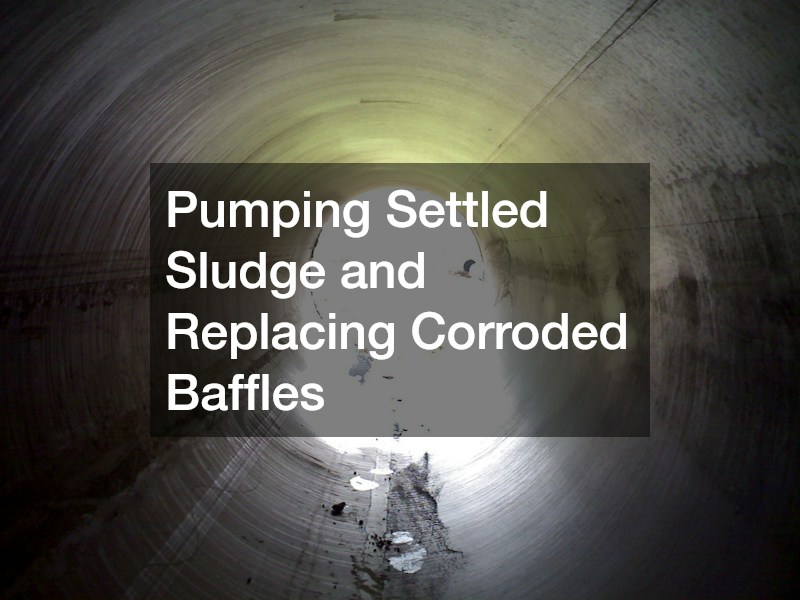
Homes served by buried wastewater systems rely on regular maintenance to keep lines flowing. Solids settle in the tank as sludge, while grease and soap rise to form a scum layer, and the clear effluent between them flows to the drainfield. When the tank goes too long without service, solids escape into the field and clog the soil, causing slow drains, odors, and soggy areas in the yard. Concrete baffles corrode from hydrogen sulfide gas and eventually fail, allowing scum to pass directly into the distribution lines.
A reliable local septic service begins by locating and exposing the access lids, then measuring sludge and scum depths to determine how quickly the tank is filling. The tank is pumped completely through the main lid, and technicians inspect the tank walls, inlet and outlet baffles, and effluent filter. Corroded baffles are replaced with PVC sanitary tees, filters are cleaned or replaced, and risers can be installed to bring lids to grade. Most households need this work every three to five years. Recording the tank and field locations helps keep future patios, plantings, and outdoor projects clear of the system.
Mapping Outdoor Living Zones and Selecting Site-Adapted Plantings
A yard that invites people outside is one of the great comforts of homeownership, yet many grow without a plan. Awkward transitions, unused corners, and plantings that struggle in their locations make the space feel disconnected from the house. Sun-loving shrubs fade in shade, thirsty perennials demand constant watering, and beds piled against the foundation trap moisture and invite insects, adding to the maintenance burden.
A thoughtful landscape design service begins with a site analysis that maps sun exposure, soil type, drainage patterns, views, and how the household wants to use the space. Outdoor living zones are defined for dining, play, gardening, and relaxing, connected by paths that flow naturally from the house. Plantings are selected for site conditions, favoring native and adapted species grouped by water needs. Beds are graded to slope away from the foundation, and lighting, seating, and shade structures make the yard comfortable well into the evening.
Balancing Sanitizer Chemistry and Servicing Filtration Equipment
A backyard swim area brings comfort and fun to warm afternoons, but only when the water stays clean and the equipment runs reliably. Sanitizer levels drop quickly in hot weather and after heavy use, allowing algae and bacteria to bloom. Low pH and alkalinity make water corrosive, etching plaster and damaging heaters, while high pH and calcium hardness deposit scale on tile and inside plumbing. Pump seals leak, filters clog, and valves stick, reducing circulation.
A dependable local pool service begins with testing and balancing water chemistry, keeping free chlorine within recommended ranges, pH near 7.4 to 7.6, total alkalinity between 80 and 120 ppm, and calcium hardness and stabilizer at appropriate levels. Surfaces are brushed, skimmed, and vacuumed. Filtration equipment is serviced by cleaning or replacing cartridges, backwashing sand or DE filters, inspecting pump seals and motor amperage, and checking valves and pressure gauges. Upgrading to a variable-speed pump cuts energy use while improving circulation.
Upgrading Outdated Panels and Adding Dedicated Circuits

Every comfort in the home depends on reliable power, and older electrical service often struggles to keep up. Panels rated at 60 or 100 amps fill quickly as households add home offices, kitchen appliances, cooling equipment, and vehicle chargers. Overloaded circuits trip breakers, overheat conductors, and loosen connections. Warning signs include warm outlet covers, flickering lights, buzzing breakers, and scorched receptacles, and some legacy panel brands contain breakers that may fail to trip during faults.
Licensed electricians begin with a load calculation and thermal imaging scan of the panel to identify overloaded circuits and hot connections. Outdated panels are replaced with modern breaker panels, often upgraded to 200 amps with a new meter base, and circuits are rebalanced to distribute loads evenly. Dedicated lines are added for cooling equipment, on-demand heaters, kitchen appliances, outdoor living areas, and vehicle chargers. AFCI and GFCI protection is installed where required, and a whole-home surge protector shields sensitive equipment.
The comforts that make a house feel like home rest on a foundation of sound systems and well-maintained spaces. A sealed foundation and watertight shell keep pests and weather out. A restored hearth, properly sized cooling equipment, balanced ductwork, and efficient hot water deliver warmth, coolness, and convenience in every season. Safe wiring powers it all, while well-maintained wastewater systems, thoughtfully designed outdoor spaces, and clean swim areas extend comfort beyond the walls.
Protecting these comforts requires a steady routine. Annual inspections of the hearth and flue, spring and fall heating and cooling service, periodic wastewater pumping, regular pest monitoring, storm checks of shingles and flashing, routine water chemistry care, and electrical evaluations catch problems early. Upgrading aging equipment before it fails keeps the household comfortable and prevents disruptive emergencies.
The reward is a home that feels welcoming every day of the year. Rooms stay warm or cool as needed, hot water arrives on demand, the yard invites relaxation, and the structure holds its value for decades. By protecting the comforts that matter most, homeowners ensure their house remains a place the whole household loves to come home to.